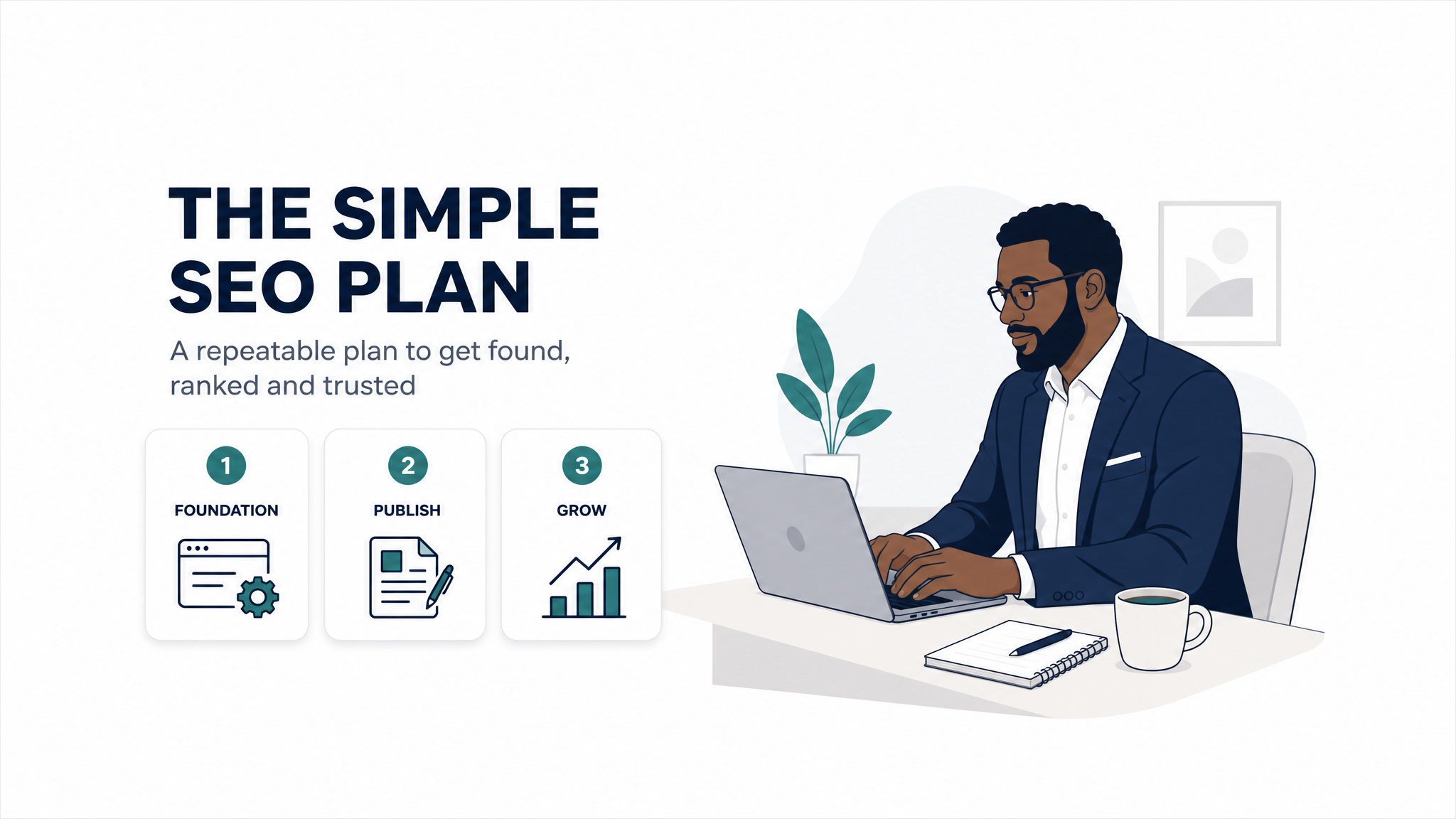
This is Part 10 — the final part of the Digital Yeast SEO course. If you've read the earlier parts you now know the pieces: keywords, content, on-page and technical, GEO, local, links and measurement. This capstone pulls them into a simple plan — one prioritised, repeatable sequence — so you can stop collecting tactics and start running SEO.

The principle: impact in order
SEO doesn't reward effort spread evenly everywhere. It rewards the right things in the right order. A site Google can't index gets nothing from more content; a fast, indexed site with thin content gets nothing from more links. So the plan is sequenced by dependency: foundation → content → authority → measure.
The Simple SEO Plan (10 steps)
Phase 1 — Foundation (get found)
1. Set up Google Search Console and Bing Webmaster Tools. Verify your site. (Both tools are free — Part 9.) Submit your sitemap.
2. Fix technical basics. Ensure the site is indexable, fast and mobile-friendly — per the on-page and technical checklist and Core Web Vitals. No index blockers, clean titles, one H1 per page.
3. Make your Google Business Profile complete and your NAP consistent if you have a physical or local presence.
Phase 2 — Content (get ranked)
4. Do keyword research. List the long-tail, low-competition, high-intent terms (with local qualifiers where relevant) you can realistically win.
5. Publish content that matches intent. For each target keyword, one page or post with the direct answer up top, clean structure and real substance. Write for Google and AI engines (GEO).
6. Keep it fresh. Update your most important pages on a schedule.
Phase 3 — Authority (get trusted)
7. Build links the earned way. One genuinely linkable asset, digital PR, relevant guest contributions, unlinked brand mentions. Quality and relevance over volume.
8. Earn and answer reviews (for local businesses) and keep NAP/citations consistent.
Phase 4 — Measure & repeat
9. Audit monthly / quarterly. Search Console health, crawl, speed, content gaps. Fix by impact × effort.
10. Repeat. SEO compounds. Publish on a cadence, refresh old content, keep earning mentions. Revisit the keyword list as you grow.
A realistic timeline
- Weeks 1–4: Foundation (indexing, technical, local basics) — lay the groundwork.
- Months 1–3: First content + on-page against your target keywords.
- Months 3–6: Authority (links, reviews, mentions). First meaningful rankings typically show here for competitive terms.
- Ongoing: Measure, refresh, expand. This is a flywheel, not a finish line.
Be patient with ranking: it takes months, not days. But the plan above means every week is moving you in the right direction — and the compounding starts early.
When to outsource
Running this well is a real job, especially the content and authority phases. If your time is better spent running the business, that's exactly where Digital Yeast helps — strategy, content, technical work and ongoing management, so you get the compounding without the daily grind.
Where this fits the course
That's the whole course — from what SEO is through to a plan you can actually run. For a visual one-page reference, the guides above link back to each module. Thanks for sticking with it — now go get found.
This is Part 10 (final) of the Digital Yeast modular SEO course. Catch up from Part 1: What is SEO any time, or browse the full course.
Comments (0)
No comments yet. Be the first to share your thoughts!
Leave a Comment
Your email address will not be published. Required fields are marked *